
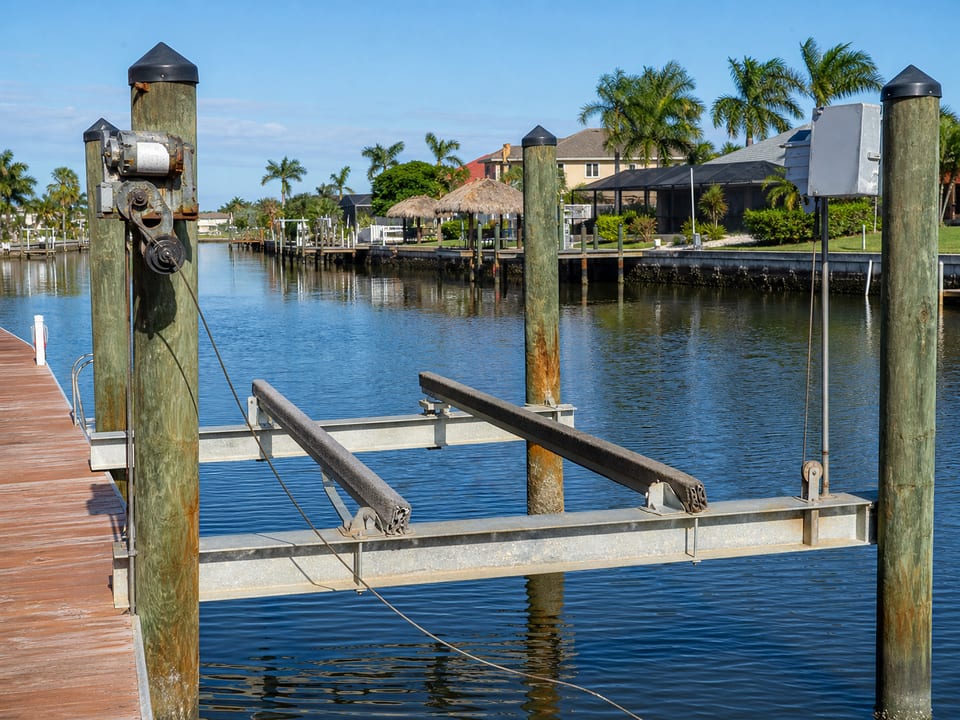
A canal lift and a bay facing lift may have different repair constraints
Apollo Beach includes canal connected homes and properties facing Tampa Bay. On a canal, width, neighboring docks and lifts, vessel approach, and equipment access may control the job. On a bay facing property, wind, wake, open water exposure, and corrosion can become more important.
The broader Tampa Bay habitat context can also affect review questions. Your contractor will verify the parcel, waterbody, and jurisdiction before deciding which county or environmental requirements apply.
The vessel and lift have to be evaluated together
The contractor will ask for the vessel make, model, length, beam, hull form, and documented loaded operating weight. Loaded weight can include engines, fuel, batteries, gear, water, and installed equipment, not just the empty vessel.
The lift manufacturer, model, rated capacity, age, cradle or bunk arrangement, and any change in vessel use can also help. The professional will confirm whether capacity, balance, support points, and clearance are appropriate for the actual setup.
Describe what the lift is doing, not what you think failed
Uneven travel, visible cable wear, fraying, stacking, corrosion, slipping, unusual motor sounds, control problems, or bunks that no longer meet the vessel evenly are useful symptoms to report. Piles, beams, dock framing, brackets, and connections may also need attention because the lift depends on them.
A symptom does not always identify the failed component. Stop using the lift if movement is uncontrolled, the support appears unstable, electrical equipment is wet or damaged, or the vessel cannot be held securely. A qualified professional can take the investigation from there.
Working room may matter as much as the failed component
On a canal, neighboring lifts, dock projections, approach angle, operating clearance, and equipment access can shape the repair plan. On a bay facing property, open water approach, wind, wake, and corrosion exposure may receive more attention.
The contractor will also check the operating envelope, including water level changes, vessel travel, beam or canopy clearance, pile spacing, and how the vessel is loaded and unloaded.
Electrical problems stay with qualified professionals
Motors, controls, disconnects, wiring, grounding, and nearby water create a serious safety boundary. If equipment is wet, damaged, or behaving unpredictably, leave it alone and stop using the lift until it can be evaluated.
Tell the contractor what happened before the problem, whether controls or breakers behaved differently, and whether there was recent storm or water exposure. They can coordinate qualified electrical review alongside the mechanical or structural work when needed.
Your contractor will handle Hillsborough and environmental requirements
Boat lift repair can involve county building processes, EPC review, and Florida or federal requirements when the work affects structures in or over the water. The exact path depends on the property and the repair being considered.
Once the scope is understood, the experienced waterfront contractor will review existing approvals, identify any electrical, structural, pile, dock, or access work, and coordinate the current requirements and specialists.
Official resources: EPC water and shoreline permits, Florida DEP environmental resource permitting, and U.S. Army Corps Florida permit guidance.
What helps start a useful repair conversation
Start with the property address, the vessel and lift information you have, the last normal operation, the first symptom, and any prior repair history. Safe photos can wait until the professional tells you which views would be useful.
The written proposal should separate confirmed repairs, optional work, unknown conditions, vessel and support assumptions, electrical dependencies, permit questions, and any parts or access limits that could affect cost or timing.
Frequently asked questions
What vessel weight should I use for an Apollo Beach lift review?
Use documented loaded operating weight, including engines, fuel, batteries, gear, water, and installed equipment. A qualified review should confirm the final capacity decision.
Does uneven travel prove a cable needs replacement?
No. Uneven travel is a symptom that can involve cable paths, spooling, drums, cradle alignment, motors, controls, loading, or support conditions.
When should I stop using the lift?
Stop use when movement is uncontrolled, cables or supports appear compromised, electrical equipment is wet or damaged, or the vessel cannot be held securely.
Do canal and bay lifts have the same repair constraints?
No. Canal width and neighboring structures can dominate one property, while bay exposure and approach can dominate another. The site must be evaluated.
Can a repair require permit or environmental questions?
Yes. Electrical, structural, pile, dock, or water work can raise separate permit or environmental questions. Your contractor will address those requirements after defining the repair.
Information reviewed August 2026. Permit and regulatory information was checked against current official sources.