
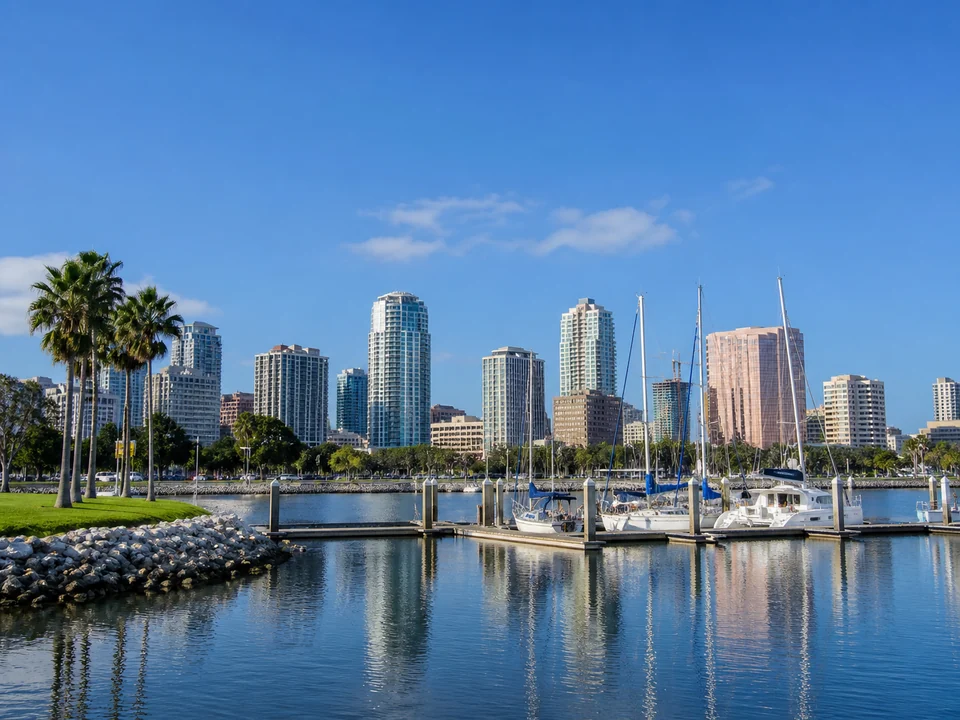
Open bay, protected basin, or finger canal
A St. Petersburg waterfront property can face open bay exposure, sit within a protected basin, or line a narrow finger canal. The actual setting changes questions about waves, navigation, working room, shoreline transitions, dock layout, lift clearance, and construction access.
Space and navigation can be decisive in finger canals
City resilience material recognizes the space and navigation constraints that can arise in some narrow finger canals. Existing structures on both sides, vessel movement, turning space, equipment access, and the relationship between docks, lifts, and seawalls deserve early attention.
Match the St. Petersburg setting to the concern
Open bay exposure may elevate wall, overtopping, structural, and material questions. Basin and canal properties can place more emphasis on confined access, dock footprint, navigation, boat lift clearance, and how neighboring structures limit working space. Erosion and drainage still require their own observations.
City and Pinellas reviews are separate layers
Your local professional will review the property, proposed work, and available records, then guide you through the requirements that apply. That may include City of St. Petersburg building and land development review, Pinellas Water and Navigation requirements for certain docks, seawalls, riprap, or dredging and filling, and any necessary Florida or federal review.
Official resources: City of St. Petersburg building and permitting, Pinellas docks and waterfront review, and Florida environmental permitting.
Helpful details for the conversation
If available, keep the survey, prior city and county permits, plans, repair history, vessel information, and notes identifying the bay, basin, or canal setting ready. Dated photos may be useful later if requested, but they do not establish property boundaries.
What changes scope in St. Petersburg
Exposure, confined space, navigation, access, demolition, structure, drainage, utilities, environmental review, engineering, city and county submissions, inspections, procurement, and discoveries affect a proposal. Property evaluation is required before figures or timing are reliable.
Explore related St. Petersburg waterfront services
Open bay exposure directs attention to seawall and shoreline guidance, while basin or finger canal space can make dock footprint, lift clearance, navigation, and working room central. Select the service guide that matches the structure or shoreline issue and use the local constraints to prepare questions.
Frequently asked questions
Is the St. Petersburg property on open bay, in a basin, or on a finger canal?
Open bay frontage, protected basins, and finger canals create different exposure, access, navigation, and working space conditions. Our trusted local contractor will verify the parcel and waterbody, then check the applicable St. Petersburg, Pinellas Water and Navigation, Florida, and federal requirements.
What should I photograph at my St. Petersburg waterfront?
If necessary from a safe position, document open water exposure or basin conditions, navigation width, neighboring structures, wall or bank changes, dock layout, lift clearance, drainage, and landward working room without crossing property lines.
Which local reviews should I check for St. Petersburg waterfront work?
The contractor handling your project will confirm the City property and proposed scope, then check current St. Petersburg, Pinellas Water and Navigation, Florida, and federal requirements.
How do exposure and confined space shape a St. Petersburg proposal?
Open bay exposure, confined canal space, navigation, access, neighboring structures, demolition, drainage, utilities, engineering, city and county submissions, inspections, materials, and discoveries shape the proposal.
Who performs the work?
Florida Waterfront Services manages your request and connection. The local professional evaluates exposure, navigation, neighboring structures, and working space conditions, contracts directly with you, and performs any work you authorize.
Information reviewed August 2026. Permit and regulatory information was checked against current official sources.