
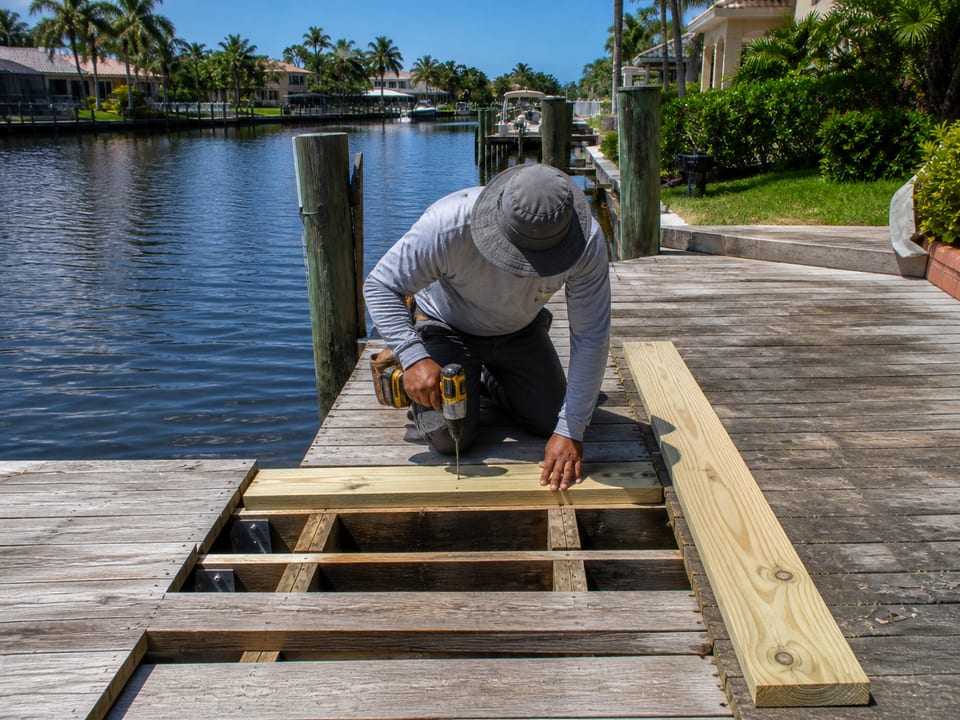
What you can observe without testing the dock
You do not need to test a damaged dock before asking for help. From a clearly safe area, note loose or missing boards, uneven walking surfaces, movement, damaged railings, shifted hardware, visible pile or framing damage, or a change in how the dock feels during normal use.
These observations help the contractor understand where to begin, but they do not prove the dock is unsafe, repairable, compliant, or ready for replacement. Similar symptoms can come from very different components or site conditions.
What a dock evaluation needs to consider
- Decking, railings, framing, beams, piles, hardware, fasteners, connections, and visible movement.
- How the dock is used, the expected loads, vessel access, and any boat lift or utilities attached to it.
- Water depth, tides, waves, currents, vessel wake, bottom conditions, and environmental resources where relevant.
- Access for people, equipment, material delivery, staging, and protection of the seawall, shoreline, lift, and neighboring improvements.
- Existing dimensions, prior plans or permits, previous repairs, storm history, and changes since the last known work.
- Electrical, plumbing, lighting, and other utilities that require separate qualified review.
- City, county, state, and federal authorization questions for the property and proposed scope.
Repair or replacement is not decided by one symptom
A loose board may be a targeted surface issue, or it may appear alongside framing, pile, connection, utility, access, or authorization concerns that change the discussion. An uneven section may also require more information than a photo can provide.
The contractor should explain what was observed, what remains unknown, which components are included, what the proposed work is intended to accomplish, and what could cause the scope to change.
Adjacent improvements can change the repair plan
A dock rarely exists by itself. Boat lifts, power, water lines, lighting, seawalls, shoreline edges, neighboring docks, vessels, and narrow access can affect sequencing, protection, and the work area.
Share any known power, water, lighting, or other utilities connected to the dock. The contractor will coordinate the qualified electrical or plumbing review the project requires before anything is disturbed.
What affects dock repair cost and timing
- The evaluated components, dimensions, materials, connections, and extent of removal or replacement.
- Access, staging, equipment, water depth, vessel movement, and protection of nearby improvements.
- Engineering, electrical, environmental, survey, and authorization requirements.
- Material availability, provider scheduling, inspections, and discoveries after safe access is established.
- Whether the proposed work can remain a repair or becomes a larger reconstruction or replacement scope.
Permit questions depend on the property and proposed work
Florida dock pathways can differ based on location, waterbody, environmental resources, size, configuration, and type of work. For example, Pinellas Water and Navigation handles dock and dredge/fill applications in municipal and unincorporated areas, while city, state, and federal review can also apply.
Repair requirements depend on the dock, waterbody, property location, existing approvals, and proposed work. After evaluating the dock, the contractor handling your project will check the current city, county, Florida, and federal requirements and explain what must be addressed before work begins.
Official resources: Florida environmental permitting, U.S. Army Corps waterfront permits, and Florida contractor license search.
Helpful details to share
- Provide the waterfront property location and identify the affected part of the dock.
- Describe when the concern first appeared and whether a storm, impact, utility problem, or change in use preceded it.
- If later requested, photograph the concern and the surrounding dock span only from normal, safe access.
- Note the dock's normal use, attached lift, vessel, utilities, and access limitations.
- Gather prior plans, permits, surveys, repair invoices, engineering records, or product information when available.
Frequently asked questions
Can photos tell me whether my dock is safe?
No. Photos can document visible conditions, but they cannot establish structural capacity, hidden deterioration, electrical safety, code compliance, or safe use.
Can individual boards or hardware be repaired without replacing the dock?
Sometimes a scope can be targeted, but a property specific evaluation must determine how the visible component relates to framing, piles, connections, utilities, access, and authorization requirements.
How much does dock repair cost?
Cost depends on the damaged components, materials, dimensions, access, water conditions, utilities, engineering, permits, staging, and unexpected findings. The contractor will define those details before providing meaningful cost or timing.
Does every dock repair use the same permit path?
No. The contractor will determine which local, Florida, and federal requirements apply after reviewing the property, waterbody, dock, and proposed repair.
Information reviewed August 2026. Permit and regulatory information was checked against current official sources.