
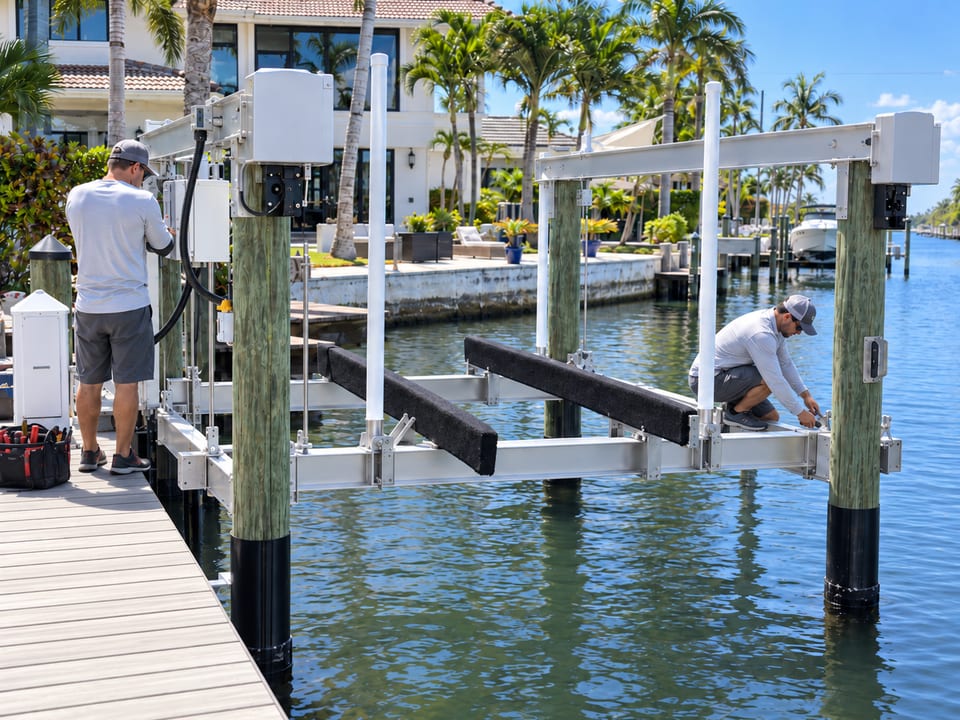
When boat lift installation needs a full evaluation
Boat lift installation becomes relevant for a first lift, a replacement system, a different vessel, or a material change in lift configuration or support. Start with the real vessel and waterfront setting, not a capacity label viewed in isolation.
Loaded vessel weight and dimensions come first
Share the vessel make, model, dimensions, and any manufacturer records you have. The contractor will verify a realistic operating weight that includes engines, fuel, batteries, water, gear, and installed equipment before recommending a lift.
Match the hull to the support geometry
Hull form, center of gravity, lifting points, bunk or cradle arrangement, and manufacturer guidance affect how the vessel should be supported. A lift must be configured around the vessel rather than forcing the hull onto a convenient standard layout.
Capacity and configuration are related decisions
Rated capacity, lift type, drive system, cable or hydraulic arrangement, support spacing, and operating pattern must work together. Capacity alone does not confirm that a particular system fits the vessel, slip, dock, piles, or water conditions.
Check operating clearance and the water setting
Water depth and variation, slip dimensions, vessel approach, exposure, obstructions, tides or changing levels, and desired raised clearance affect operation. The evaluation should consider normal use as well as access for installation, inspection, and service.
Confirm pile, dock, and structural support
A lift may rely on dedicated piles, an existing dock, or another engineered support arrangement. Existing framing, piles, connections, deterioration, loads, and available space must be evaluated before the structure is assumed capable of carrying the system.
Plan electrical service and maintenance access
Electrical equipment near water requires qualified design and installation. Disconnecting means, protection, wiring, controls, equipment location, safe service access, and the condition of existing electrical components must be addressed by the qualified parties the project requires.
Separate lift repair from installation
Repair begins with an existing lift and a known problem or component. Installation asks whether the vessel, support, water setting, electrical service, and operating clearances require a new or materially different system.
Boat lift installation can involve dock, structural, electrical, local, Florida, and federal requirements. The contractor will identify the correct review path and coordinate the qualified work the project needs.
Official resources: Florida environmental permitting, U.S. Army Corps waterfront permits, and Florida contractor license search.
Helpful details to share
If you already have vessel records, dock or pile information, prior permits, plans, or notes about water levels and access, keep them nearby. The contractor can request anything else needed for the evaluation.
What changes scope, cost, and timing
Vessel data, lift type, support condition, piles, dock changes, electrical service, access, equipment availability, engineering, permits, inspections, weather, and unexpected conditions can change the proposal. The contractor will define those details before presenting meaningful cost or timing.
Frequently asked questions
What vessel weight should I use for lift planning?
Use a realistic loaded operating weight supported by manufacturer and ownership records, not dry weight alone.
Is a higher capacity rating enough to confirm the lift fits?
A higher capacity rating is not enough by itself. Hull support, center of gravity, lift geometry, piles or dock structure, water conditions, clearance, electrical service, and access also matter.
Can an existing dock support a new lift?
Existing support requires a structural evaluation of the dock, piles, framing, connections, condition, loads, and proposed lift arrangement.
Why is maintenance access part of installation planning?
Controls, drives, cables or hydraulic components, structure, and electrical equipment need safe access for future inspection and service.
Who performs the work?
Our trusted local contractor will evaluate the vessel and property, explain the recommended lift, contract directly with you, and perform the work you authorize. Florida Waterfront Services keeps the request and introduction simple.
Information reviewed August 2026. Permit and regulatory information was checked against current official sources.