
Describe the visible change before naming the cause
You do not need to identify the cause before requesting help. From stable ground, note a receding edge, exposed roots, bare soil, slumping, settlement, washout, soil loss near a wall, sediment movement, a changing drainage outlet, or changes after storms or repeated boat traffic.
These observations help the contractor understand where to begin, but several conditions may be working together. Waves, current, water levels, drainage, runoff, vessel wake, storms, soil, vegetation, earlier construction, and nearby structures can all affect the shoreline.
What professional shoreline evaluation needs to consider
- Property boundaries, shoreline geometry, grade, soils, existing armoring, and previous work.
- Waterbody, tides, waves, currents, vessel wake, water depth, seasonal conditions, and storm exposure.
- Drainage, runoff, outfalls, irrigation, upland grading, and water movement without assuming a single cause.
- Vegetation, habitat, wetlands, submerged resources, and other environmental conditions.
- Docks, lifts, seawalls, buildings, pools, utilities, neighboring improvements, access, and intended waterfront use.
- Engineering, survey, environmental, city, county, state, and federal review for the proposed work.
There is no universal stabilization method
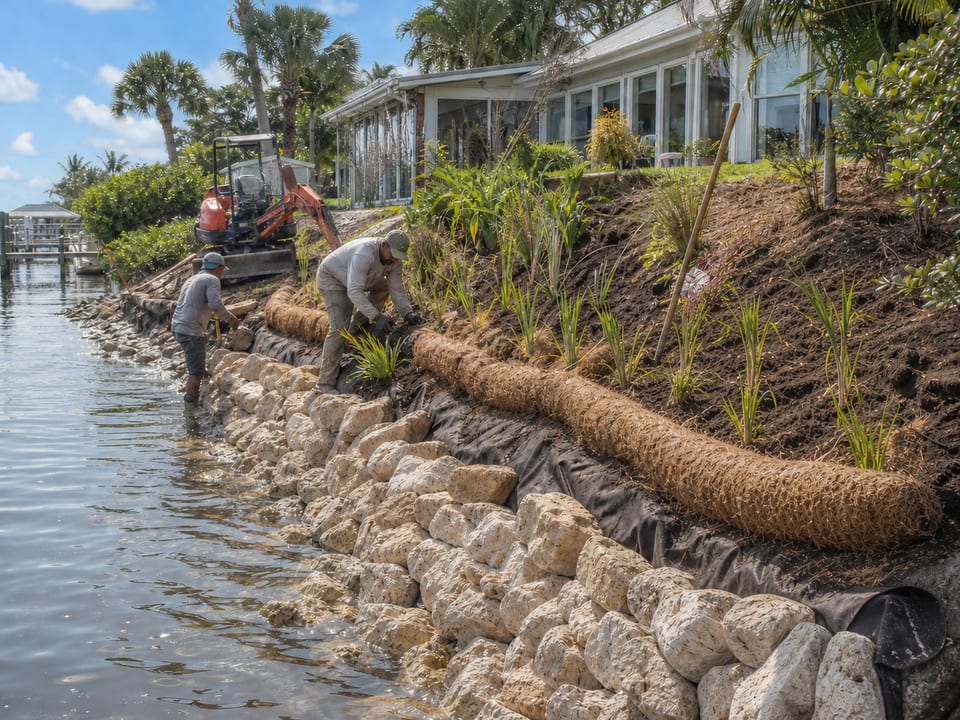
Possible approaches can include vegetation, living shoreline elements, stone, riprap, revetments, seawalls, drainage work, grading, or a combination. The contractor will evaluate which options fit the property instead of assuming one method from the visible symptom.
The contractor should explain how the recommended approach responds to the shoreline, water setting, drainage, nearby improvements, intended use, environmental resources, access, maintenance, and permit requirements.
Shoreline stabilization, seawall repair, and seawall installation
Shoreline stabilization begins with the broader shoreline system and does not assume a wall. Seawall repair begins with an existing wall and its evaluated condition. Seawall installation addresses a new or replacement wall concept.
A property can involve more than one of these questions. A property specific evaluation determines how they relate.
Drainage and water movement require careful review
Visible runoff or water movement can be useful to document, especially after rain or a recurring event. It is not enough to declare the cause of erosion or choose a fix.
Do not redirect drainage, block an outlet, add fill, or disturb the shoreline based on an online assumption. Drainage, grading, structural, and environmental consequences require property specific review.
What affects cost and timing
- The evaluated shoreline length, geometry, water setting, soils, environmental resources, and selected method.
- Engineering, surveys, environmental review, design, permits, access, staging, equipment, and material placement.
- Protection or modification of seawalls, docks, lifts, utilities, drainage, landscaping, and neighboring improvements.
- Authority review, seasonal or water constraints, provider scheduling, and discoveries during investigation or access.
Permit and environmental questions are property specific
Florida and federal programs can apply to shoreline stabilization, and local processes differ by jurisdiction. For example, Pinellas Water and Navigation reviews specified seawall, riprap, dock, and dredge or fill work in Pinellas County.
Shoreline work can involve local, Florida, and federal requirements, depending on the property, waterbody, environmental resources, proposed method, and footprint. Our trusted contractor will evaluate those conditions, identify the likely review path, and coordinate the required permitting or environmental steps.
Official resources: Florida environmental permitting, U.S. Army Corps waterfront permits, and NOAA living shorelines guidance.
Frequently asked questions
Does visible erosion mean I need a seawall?
No. Visible erosion does not establish the cause or suitable method. The property, water setting, environmental conditions, intended use, and authority requirements must be evaluated.
Are living shorelines always the best option?
No method is universally suitable. Living shoreline, vegetation, stone, revetment, seawall, drainage, and combined approaches each require property specific evaluation and authorization.
Can I add rock or fill temporarily?
Do not place material in or near the water based on a generic assumption. Filling and shoreline work can trigger environmental and other requirements.
How much does shoreline stabilization cost?
Cost depends on the shoreline, recommended method, design, environmental review, permits, access, materials, nearby improvements, and unexpected findings. The contractor will define those details before providing meaningful cost or timing.
Information reviewed August 2026. Permit and regulatory information was checked against current official sources.
Related waterfront information
- Compare all waterfront services
- Review seawall repair
- Plan for seawall installation
- Learn what waterfront homeowners should know about erosion
- Compare riprap and seawalls
- Review Florida seawall permit questions
- Find Tampa and South Shore waterfront guidance
- Find Pinellas waterfront guidance
- Request help with shoreline erosion