
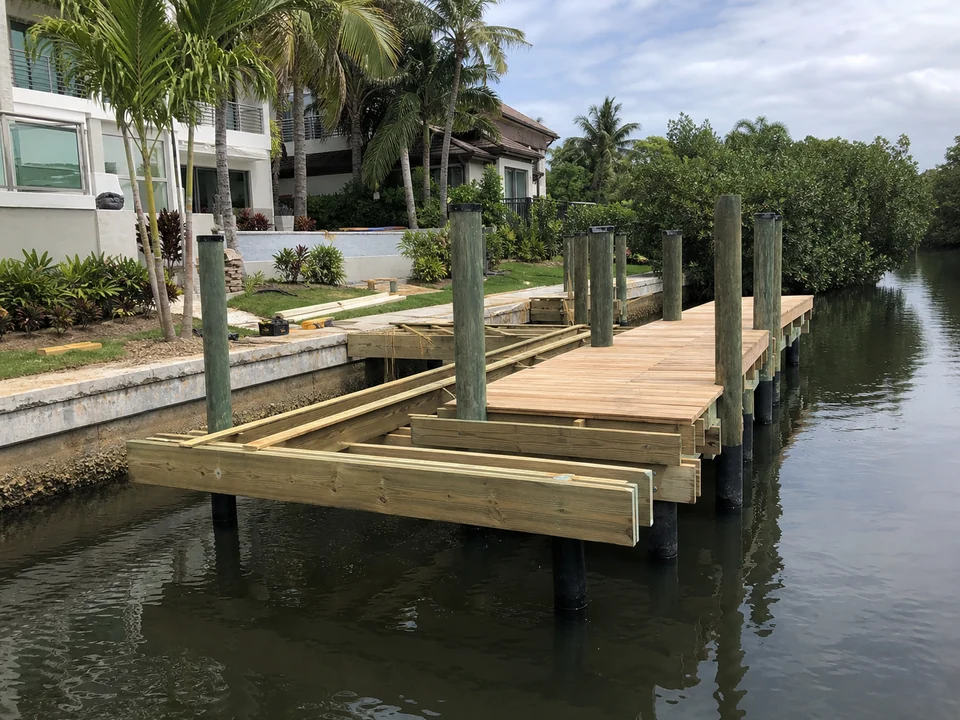
When dock construction becomes the right question
Dock construction may involve a first dock, a replacement structure, or a major change in footprint, access, or use. The contractor will begin with how the dock should function for the property, vessel, and waterway before recommending a layout.
Start with intended dock use
Share the vessel, tie up and boarding needs, fishing or seating use, storage, accessibility concerns, utilities, and any future boat lift plans. The contractor can help turn those priorities into a practical layout instead of a collection of disconnected features.
Footprint and configuration affect more than deck area
Length, width, orientation, platforms, slips, access walks, setbacks, neighboring structures, and shoreline connection all shape the footprint. The contractor must balance the desired use with the property, navigation, structural, and permit limits of the site.
Navigation, depth, and changing water levels
Vessel approach, turning space, marked or customary navigation, depth, tide or water level variation, exposure, obstructions, and nearby structures affect usable access. Measurements and observations must come from safe, authorized methods rather than assumptions made from aerial images or a neighboring dock.
Connecting the dock to the shoreline
The dock must meet the upland access point and relate to any seawall, bank, vegetation, environmental resource, drainage feature, or existing shoreline improvement. Construction access and material handling also need a workable path that avoids unsupported property or environmental conclusions.
Structure, utilities, and future lift coordination
Piles, framing, decking, connections, loads, electrical service, water, lighting, and other utilities require coordinated design and qualified installation. If a boat lift may be added, vessel facts, lift geometry, pile or dock support, clearance, electrical service, and maintenance access should be considered early.
Current reviews depend on the proposed dock
The review path depends on the parcel, waterbody, proposed footprint, existing records, environmental conditions, and planned use of the dock. Our experienced waterfront contractor will compare the proposed project with current requirements and coordinate with the appropriate authorities and specialists before treating any design or permit assumption as final.
Official resources: Florida environmental permitting, U.S. Army Corps waterfront permits, and Florida contractor license search.
Helpful details to share
If you already have a survey, prior permits, plans, vessel dimensions, or reliable depth information, keep them nearby. The contractor can request any additional records or safe shoreline photos needed for the evaluation.
What changes a dock proposal
Dock layout, access, piles, materials, utilities, environmental review, surveys, engineering, demolition, permits, inspections, weather, and water conditions can change the proposal. The contractor will define those details before presenting meaningful cost or timing.
Frequently asked questions
What should I decide before discussing a new dock?
Define the intended use, vessel access, boarding needs, desired configuration, utilities, and whether a future boat lift should be coordinated.
Can a neighboring dock show what my property can build?
A neighboring dock cannot establish the answer. Parcel information, setbacks, water conditions, navigation, environmental resources, structure, and current requirements may differ.
Why does water level variation matter?
It can affect vessel approach, boarding, clearance, pile and structure questions, and how the dock functions through changing conditions.
Should a future boat lift be planned with the dock?
Yes, when a lift is part of the goal. Vessel weight and geometry, support, clearances, electrical service, and maintenance access can influence the dock plan.
Who performs the work?
Our trusted local contractor will evaluate the property and waterway, explain the recommended dock plan, contract directly with you, and perform the work you authorize. Florida Waterfront Services keeps the request and introduction simple.
Information reviewed August 2026. Permit and regulatory information was checked against current official sources.