
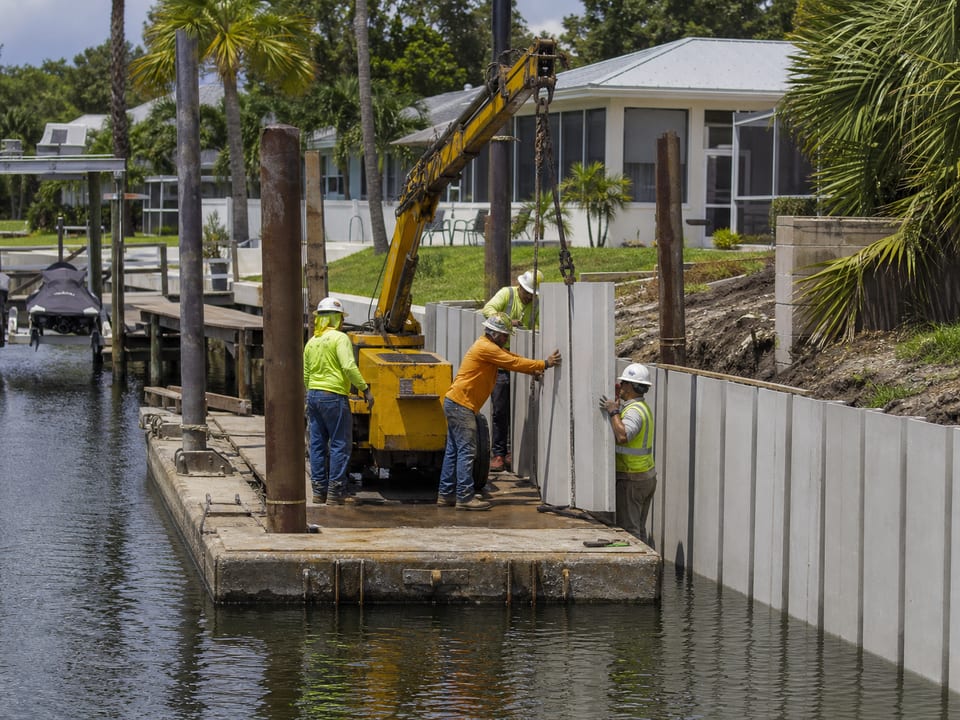
When seawall installation deserves evaluation
A new seawall may make sense when a property needs a shoreline retaining system, a complete replacement, or a major change in the wall alignment or purpose. The contractor will begin with what the wall needs to retain and protect, then evaluate which type of system fits the property.
Define the shoreline retaining purpose
Share what the shoreline is doing now, what sits behind it, and what you want the finished wall to accomplish. The contractor will evaluate the soil, exposure, water setting, drainage, nearby improvements, and upland use together.
Separate repair from a new system
An existing wall with localized deterioration may raise a repair question. Widespread movement, changing alignment, recurring soil loss, major elevation goals, or a planned replacement can require a broader installation discussion. A site evaluation determines which path deserves consideration.
Soil, drainage, and elevation work together
Retained soil, backfill, groundwater, surface drainage, outfalls, overtopping, and target elevations affect how a shoreline retaining concept is developed. These conditions must be evaluated together because correcting one symptom without understanding water and soil movement can leave the underlying problem unresolved.
Wall alignment and neighboring transitions
The proposed wall must fit the property information, shoreline shape, docks, lifts, pools, utilities, drainage, and transitions to neighboring walls or natural edges. A nearby wall can provide context, but it does not determine the correct alignment, elevation, or material for this property.
Structural concept, materials, and access
Engineering, loads, embedment, anchorage, cap details, materials, construction sequencing, equipment access, and staging shape the structural concept. Shoreline access may also affect demolition, debris handling, protection of nearby improvements, and how the work can be performed.
Who may need to review the project
The parcel, waterbody, ownership records, existing approvals, environmental conditions, and proposed work all influence the review process. Your contractor will sort through those details, explain which municipal, county, Florida, or federal requirements may apply, and coordinate any surveying, engineering, or environmental work the project needs.
Official resources: Florida environmental permitting, U.S. Army Corps waterfront permits, and Florida contractor license search.
Helpful details to share
If you already have a survey, prior permits, plans, repair history, or notes about drainage or movement, keep them nearby. The contractor can request anything else needed for the evaluation. Any photos should be taken only from stable, dry ground.
What changes scope, cost, and timing
Wall length, height, alignment, access, demolition, soil and water conditions, drainage, materials, engineering, permits, inspections, weather, and unexpected conditions can all affect the proposal. The contractor will define those details before presenting meaningful cost or timing.
Frequently asked questions
When is seawall installation different from repair?
Installation addresses a new, fully replaced, or materially changed shoreline retaining system. Repair begins with an existing wall and a defined condition or component.
Can I choose a seawall material from an online comparison?
A comparison can frame questions, but soil, drainage, elevation, exposure, structure, access, neighboring transitions, and current requirements must be evaluated first.
Why do drainage and retained soil matter?
A seawall holds back material while water moves through and around the shoreline. Their interaction is part of the property specific structural evaluation.
Will the neighboring seawall determine my design?
A neighboring seawall does not determine the answer. Transitions matter, but property information, elevations, existing conditions, loads, access, and professional findings determine the project concept.
Who performs the work?
Our trusted local contractor will evaluate the shoreline, explain the recommended system, contract directly with you, and perform the work you authorize. Florida Waterfront Services keeps the request and introduction simple.
Information reviewed August 2026. Permit and regulatory information was checked against current official sources.