
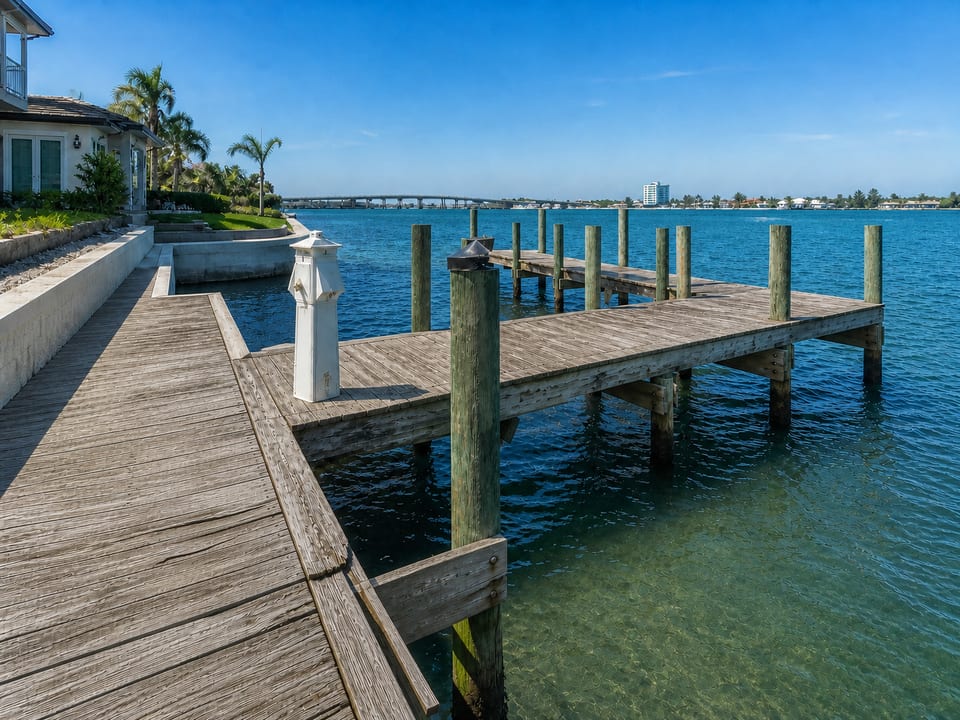
The waterway and intended use both matter
A dock on Clearwater Harbor or the Intracoastal Waterway can face different navigation, exposure, and equipment approach conditions than a dock on a canal or protected bay. Water depth, vessel traffic, neighboring structures, and working room can all affect the repair.
The contractor will also ask how the dock is used for walking, mooring, boat lift support, utilities, fishing, kayak access, or another purpose. Replacing a board is different from changing the structure, capacity, or layout.
A dock repair should be evaluated by component
The professional will separate decking and railings from joists, beams, piles, pile caps, braces, fasteners, connectors, the shore connection, ladders, utilities, and boat lift attachments. That makes it easier to define what is damaged and what still needs inspection.
Soft, loose, split, corroded, displaced, or moving materials are useful observations, but they do not identify the full repair. Restrict access if footing, support, railings, utilities, or electrical equipment appear unsafe.
Canal, harbor, Intracoastal, and bay sites create different access problems
A harbor or Intracoastal site may involve active navigation and a wider water approach. A narrow canal can put neighboring docks, lift clearance, turning room, and limited equipment reach at the center of the job. A broader bay setting can increase open water exposure and staging concerns.
The contractor will consider the dock footprint, water approach, shoreline connection, nearby structures, and any area where the work could affect navigation or another property.
Damaged decking may not be the whole repair
A problem visible at deck level can lead to questions about framing, fasteners, connections, piles, alignment, movement, scour information, or the transition to shore. The contractor will determine which parts belong in the repair and whether additional records or structural review are needed.
The proposal should identify what was inspected, what remains concealed, whether pile or structural work is included, and which findings would turn a surface repair into a broader project.
Utilities and boat lift loads need their own review
Dock lighting, receptacles, water lines, pumps, and boat lift controls can require qualified trades and separate safety precautions. Wet or damaged electrical equipment should be left alone until a qualified professional evaluates it.
When a boat lift attaches to the dock or nearby piles, the contractor also needs to consider the vessel, lift loads, brackets, beams, and electrical service. A dock repair should not assume the existing lift support is adequate.
Your contractor will handle Clearwater and Pinellas requirements
Clearwater publishes marine and dock permit resources. Pinellas Water and Navigation also identifies local responsibilities for docks, seawalls, riprap, tie poles, and dredging and filling in municipal waters.
The contractor will review the property, existing approvals, dock footprint, environmental conditions, and proposed work. They will then coordinate current Clearwater, Pinellas, Florida, or federal requirements instead of assuming that an older record or existing dock authorizes the repair.
Official resources: Clearwater marine and dock checklist, Pinellas County docks and marine structures, and Florida DEP environmental resource permitting.
What helps start the repair conversation
Begin with the property address, what changed, and how the dock is used. Surveys, dock or lift plans, prior permits, repair history, vessel information, and utility details are helpful if they are easy to find, but you do not need them before asking for help.
A useful written scope should separate surface, structural, pile, utility, boat lift, access, and authority work. It should also explain assumptions, exclusions, concealed conditions, and the findings or approvals that could change the project.
Frequently asked questions
Does damaged decking mean only the boards need repair?
Not necessarily. The evaluation should check framing, fasteners, connections, piles, shore attachment, utilities, and lift interfaces where relevant.
How does a Clearwater canal dock differ from a harbor dock?
A canal can place working width and neighboring structures at the center, while a harbor or Intracoastal site can raise different navigation, exposure, and approach questions.
When should I stop using a dock?
Restrict use when footing, rails, support, connections, utilities, or electrical equipment appear unstable or unsafe. Use qualified help for an immediate hazard.
Where do Clearwater dock permit questions begin?
The waterfront contractor will use current Clearwater marine and dock resources and Pinellas Water and Navigation information, then determine whether Florida or federal review also applies to the property and scope.
What should the repair proposal separate?
It should distinguish surface, structural, pile, utility, lift interface, access, and permit work, plus assumptions, exclusions, and concealed conditions.
Information reviewed August 2026. Permit and regulatory information was checked against current official sources.