
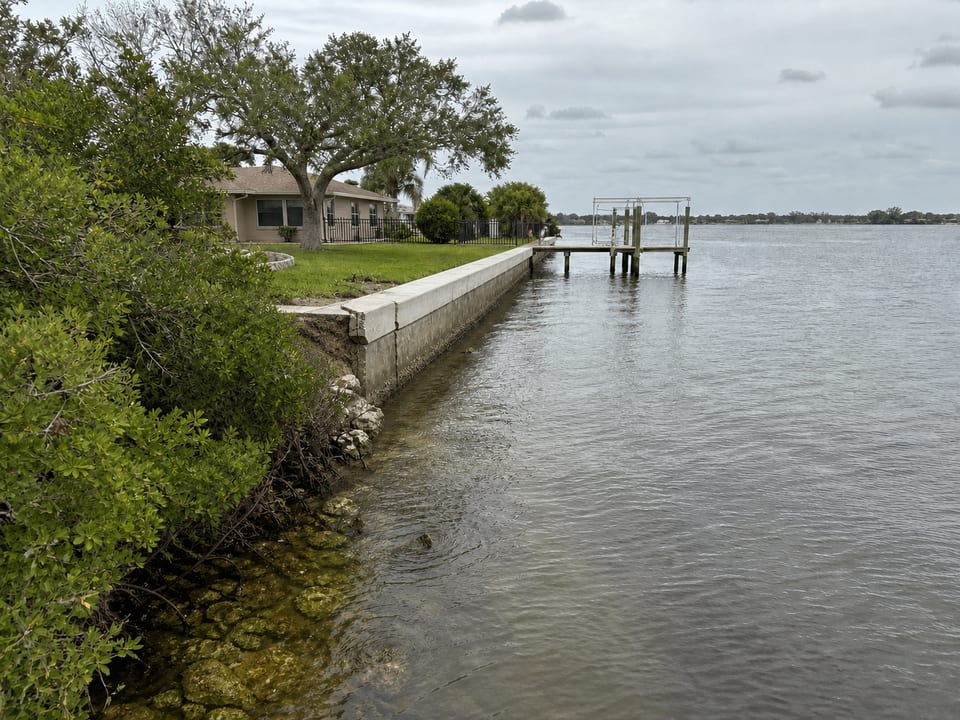
Ruskin water conditions can change what the wall needs
Ruskin properties can connect with Ruskin Inlet, the Little Manatee River, lower Tampa Bay, residential canals, or another nearby water setting. Those places do not expose a seawall to the same current, tide, waves, vessel traffic, or equipment access.
An inlet can bring confined navigation and tidal movement. A river can add current and bank transition concerns. Lower Tampa Bay can create broader exposure, while a canal may put working width and neighboring structures at the center of the plan. Your contractor will confirm which conditions matter at the property.
Show the contractor what has changed at the wall and behind it
Useful observations include separations, leaning, cracking, cap movement, settlement, depressions, voids, washout, changing wall ends, and drainage outlets that appear to move soil. It also helps to know when the change is easiest to see.
You do not need to decide whether current, wake, drainage, soil, or prior construction caused the problem. The contractor will connect the visible evidence with any survey, engineering, drainage, or environmental information the project needs.
The ends of the seawall can be as important as the middle
The point where a seawall meets a natural bank, neighboring wall, dock, ramp, or outfall can influence how water and soil move around the property. A repair plan should not treat those transitions as unrelated to the damaged area.
If you already have safe photos of both ends, the yard behind the wall, nearby structures, and the water side, keep them available. The professional can decide whether additional views or records are needed.
A small damaged area still belongs to a larger system
A localized problem may lead to a targeted repair, but widespread movement, failing support, repeated soil loss, incompatible additions, or a change in property use can raise broader replacement or shoreline questions.
The contractor will explain what was observed, what needs further investigation, which repair options fit the wall, and what conditions would expand the project. The written scope should also address drainage, access, transitions, and clear limits.
Your contractor will handle the Ruskin review path
Many Ruskin properties follow Hillsborough County processes, but the actual parcel and jurisdiction still need to be confirmed. Work in wetlands or other waters can also involve EPC, Florida, or federal review depending on the waterbody and the proposed work.
The contractor will review property boundaries, existing permits, environmental conditions, any submerged land questions, and the proposed wall alignment before relying on a permit process or exemption.
Official resources: EPC water and shoreline permits, Florida DEP environmental resource permitting, and U.S. Army Corps Florida permit guidance.
Access can change the repair approach
Side yards, bridges, utilities, docks, trees, pools, neighboring structures, water depth, currents, navigation, and tidal windows can all affect how equipment and materials reach the seawall.
The contractor will consider those constraints while developing the work approach. The proposal should explain the access assumptions and identify what could change if water conditions or authority requirements are different from what was expected.
What helps start the conversation
Begin with the property address, what you have noticed, and when it changed. If surveys, prior plans, permits, repair history, drainage information, or safe photos are easy to find, keep them available for the contractor.
The professional will use that information to build a property specific scope. Cost and timing can then reflect the actual condition, materials, access, engineering, environmental review, and approvals.
Frequently asked questions
Why does Ruskin Inlet versus the Little Manatee River matter?
Ruskin Inlet, the Little Manatee River, lower Tampa Bay, and residential canals can present different current, exposure, navigation, and access conditions. Our trusted local contractor will confirm the property water setting and include those conditions in the seawall evaluation.
What should I photograph at the ends of a seawall?
Capture each transition to natural bank, neighboring wall, dock, ramp, outfall, or other structure, plus soil conditions behind the wall.
Does recurring soil loss prove the wall failed?
No. Soil loss is a condition to evaluate. Drainage, joints, transitions, retained material, wall movement, and other factors can need investigation.
Which authorities can apply to a Ruskin seawall?
Hillsborough County, EPC, Florida, and federal authorities can have roles depending on jurisdiction, waterbody, resources, and scope.
What should a Ruskin seawall proposal explain?
It should describe observed conditions, defined work, assumptions, exclusions, access, drainage and transition treatment, professional dependencies, and permit questions.
Information reviewed August 2026. Permit and regulatory information was checked against current official sources.
Related pages
- Review Ruskin waterfront context
- Compare seawall repair decisions
- Review the Tampa and South Shore area
- Understand seawall repair cost variables
- Review seawall warning signs
- Compare seawall repair and replacement
- Compare vinyl and concrete seawall questions
- Review Florida seawall permit questions
- Request help with a Ruskin seawall