
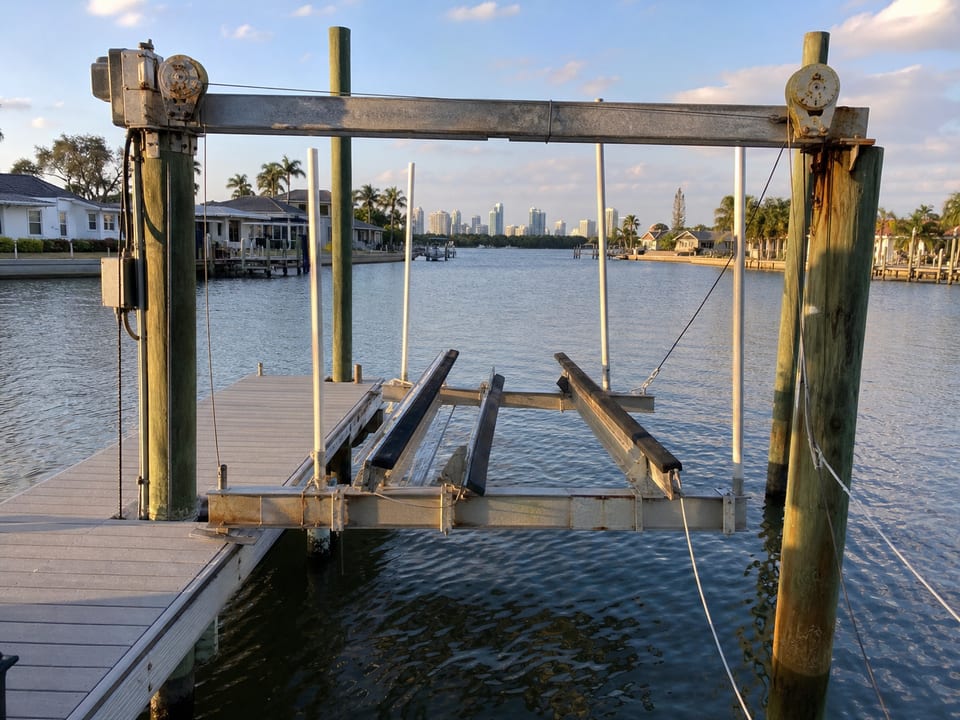
Open water, protected basins, and finger canals change the repair plan
A lift on open or bay water can face different wind, wake, corrosion, and approach conditions than one inside a protected basin or narrow finger canal. The water setting can also change navigation, equipment access, pile geometry, and the room available to service components.
The local contractor will confirm the property, water setting, and City status, then use the actual exposure, clearance, and access conditions to shape the repair.
The vessel and lift records belong together
The contractor will consider the vessel make, model, length, beam, hull form, and documented loaded operating weight along with the lift manufacturer, model, rated capacity, motor arrangement, cradle or bunks, pile spacing, and last normal operation.
A change in vessel can affect load, balance, support points, and clearance. The professional will confirm whether the lift capacity and geometry still fit the vessel rather than relying on one equipment label.
Describe each symptom without guessing at the cause
Cable wear, fraying, stacking, corrosion, uneven travel, drum behavior, unusual motor sounds, control response, cradle position, bunk contact, pile movement, beam condition, dock connections, and electrical exposure are all useful symptoms to report separately.
Those details help the contractor focus the inspection without turning a symptom into a diagnosis. Stop using the lift if the vessel cannot be held securely, movement is uncontrolled, support appears unstable, or electrical equipment is wet or damaged.
Finger canal access can shape the entire job
A narrow canal can limit boat or barge access, turning room, neighboring clearance, lift travel, canopy height, and component removal. A protected basin may offer different staging options but can still have shared access and marina constraints.
An open bay property may put wind, wake, corrosion, and rougher approach conditions near the front of the evaluation. The repair plan should match the verified setting rather than a general city assumption.
The lift, dock, piles, and electrical system may overlap
A lift repair is not always limited to the motor or cables. Piles, brackets, beams, dock framing, fasteners, controls, utilities, and shore side electrical service may need their own qualified review.
The written scope should separate lift components from dock or pile work, electrical work, vessel adjustments, optional items, and concealed conditions that could change the recommendation.
Your contractor will coordinate St. Petersburg and Pinellas requirements
The City provides parcel and zoning resources, while Pinellas Water and Navigation identifies responsibilities for certain dock, lift, seawall, and dredging and filling work in municipal waters. Florida or federal review can also depend on the repair.
The contractor will review existing approvals, property and waterbody information, structural or electrical changes, and current authority requirements before relying on a permit or exemption statement.
Official resources: St. Petersburg building and permitting, Pinellas County docks and marine structures, and Florida DEP environmental resource permitting.
What helps the contractor prepare
Start with the property address, vessel and lift information, the last normal operation, the first symptom, and any repair or storm history. Safe photos of the lift, cables, cradle, motors, controls, piles, dock connections, and approach can be shared later if the contractor requests them.
A useful proposal should explain the likely repair, capacity assumptions, parts, access, electrical and structural dependencies, permit questions, exclusions, and conditions that could change cost or timing.
Frequently asked questions
Why does a St. Petersburg finger canal change lift repair?
A tight canal can limit navigation, equipment approach, neighboring clearance, component removal, and lift travel. Open bay and basin sites have different constraints.
What does loaded vessel weight include?
It can include engines, fuel, batteries, water, gear, and installed equipment in addition to the bare vessel. Use documented data and professional confirmation.
Does a noisy motor prove the motor failed?
No. Sound is one symptom. Controls, voltage, load, mechanical resistance, drums, cables, and support alignment can also require review.
When is electrical review needed?
Wet, damaged, tripping, modified, or questionable shore side equipment should be left alone and evaluated by a qualified electrical professional.
Can dock or pile work be part of a lift repair?
Yes. When the lift support or attachments are involved, the scope can require structural, dock, pile, and authority coordination beyond mechanical components.
Information reviewed August 2026. Permit and regulatory information was checked against current official sources.